

Many consumers, distributors and sanitary brands hold a misunderstanding: they believe sanitary pads with fluff pulp are low-quality products. This is not true. Fluff pulp is widely used in many disposable hygiene products we use daily, including sanitary pads, diapers, wet wipes and facial tissues.
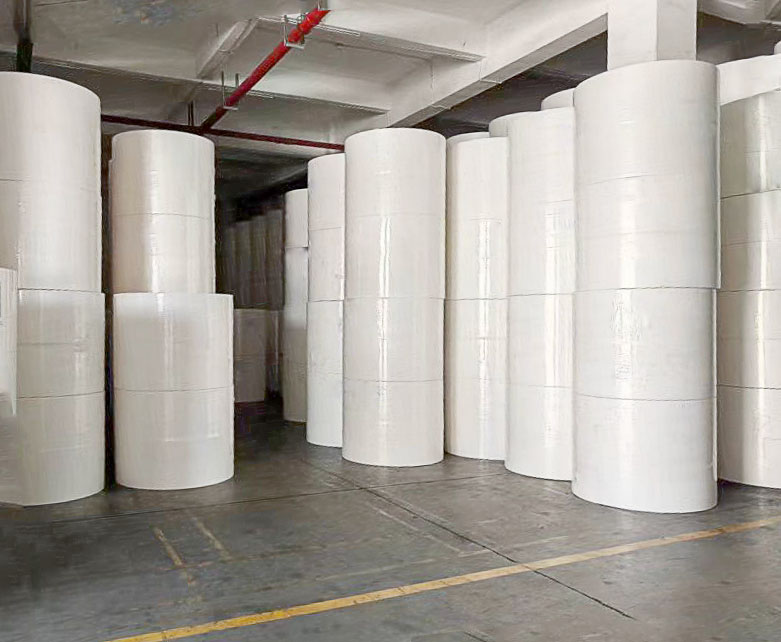
Fluff pulp, also known as FLUFF PULP, is made from natural softwood or hardwood trees. It features excellent adsorption and absorption capacity. When combined with super absorbent polymer (SAP) and wet-strength paper, it delivers superior absorption performance. The absorbent core of slim and lightweight sanitary pads is constructed with fluff pulp and SAP wrapped by wet-strength paper.
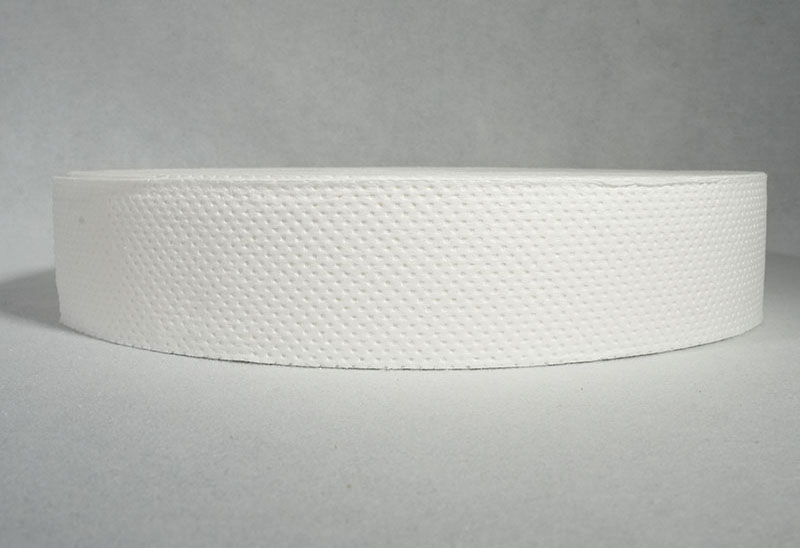
Products from certified and reputable sanitary pad manufacturers never use so-called “black cotton”. There are several key reasons: First, formal sanitary pad manufacturers must obtain a hygiene license for disinfectant product production before manufacturing. Any illegal use of black cotton or non-compliant materials will result in heavy penalties, license revocation and factory shutdown. Second, imported fluff pulp (even from the US) is affordable, costing less than 10 USD per kilogram. There is no economic incentive for manufacturers to take huge legal risks by using black cotton. Third, black cotton will contaminate grinding discs, production lines and the whole workshop. It compromises factory hygiene, equipment cleanliness and endangers workers’ health. Fourth, standard fluff pulp is supplied in sheets or rolls. Recycled waste pulp cannot form stable sheets and is hard to process. It easily clogs grinding discs and triggers mold and other quality failures.
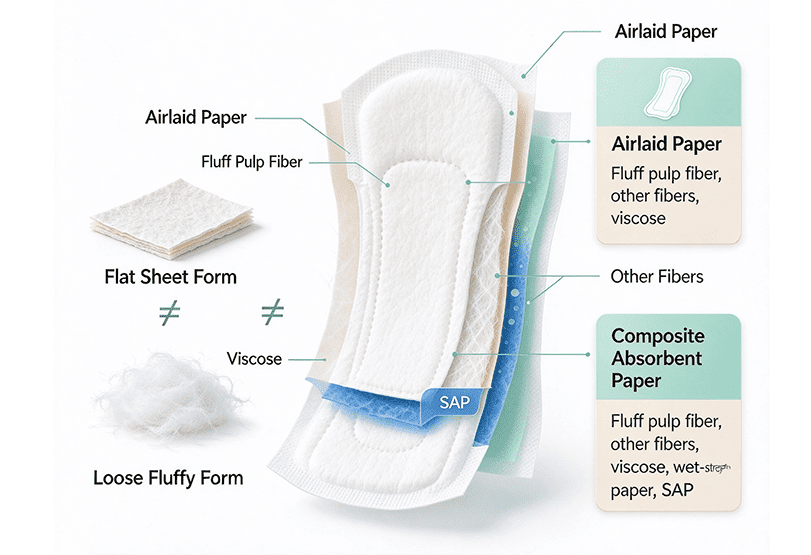
Ultra-thin sanitary pads also contain fluff pulp fibers inside their absorbent core. The difference is that the pulp is compressed into a flat sheet instead of loose fluffy form.
Typical absorbent structure of ultra-thin sanitary pads is composite absorbent paper wrapped by airlaid paper.
· Airlaid paper: mainly composed of fluff pulp fiber, other fibers and viscose.
· Composite absorbent paper: mainly composed of fluff pulp fiber, other fibers, viscose, wet-strength paper and super absorbent polymer (SAP).

Global Link is one of the leading hygiene products raw materials manufacturer since 2008.
 English
 English
 Español
 عربي


 IPv6 network supported