The Difference Between Airthrough Nonwoven Fabric and Spunbond Nonwoven Fabric
Dec 30, 2024
1. Airthrough nonwoven fabric is a non-woven fabric produced by using hot air from a drying device to penetrate the fiber web after short fibers are combed, allowing it to be heated and bonded together. Spunbond nonwoven fabric is a process of extruding and stretching polymers to form continuous filaments, which are then laid into a web. The web is then self bonded, thermally bonded, chemically bonded, or mechanically reinforced to transform into nonwoven fabric. Spunbond non-woven fabric is made of long fibers, but its raw material is plastic slices.
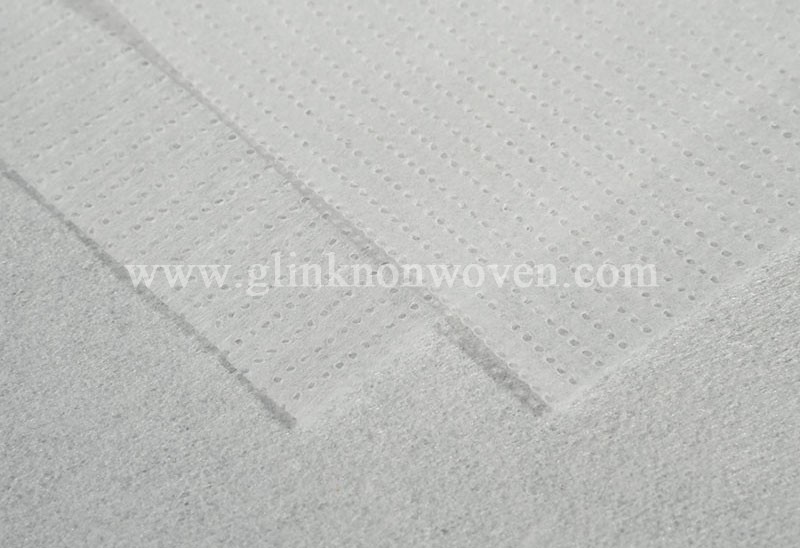
2. Hot air nonwoven topsheet has the characteristics of high fluffiness, good elasticity, soft hand feel, strong warmth retention, and good breathability and permeability. Spunbond non-woven fabric is made by directly spinning polymer particles into a mesh without using fibers, and then heating and pressing them with a rolling mill. It has excellent mechanical properties, such as tensile strength, elongation at break, tear strength, etc. It is very thin, but its softness and breathability are not as good as hot air non-woven fabric.
3. Diapers made from air through bonding nonwoven will feel softer and more comfortable to the touch; Pulling the surface of the diaper, the hot air non-woven fabric can easily pull out the threads. Diapers made from spunbond non-woven fabric are harder to touch and rougher compared to hot air non-woven fabric. Spunbond non-woven fabric is difficult to pull out fibers.
Read More



 English
 English
 Español
 عربي
عربي


 IPv6 network supported